2026.8.21 Research from the Numazu Branch Published in Oncogene (External link)
TKTL1 mediates metabolic adaptation and stress resistance in pancreatic cancer cells under nutrient-deprived conditions
【Summary】
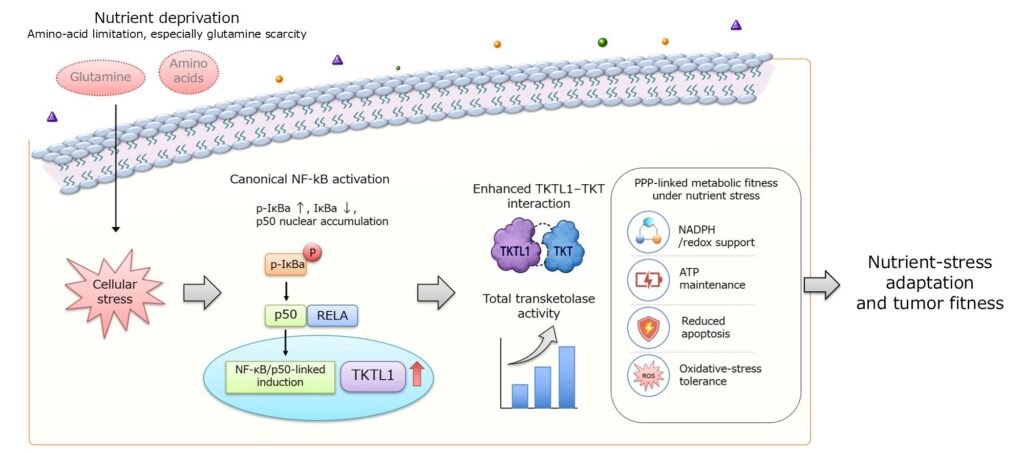
In pancreatic cancer cells, amino acid deprivation, particularly glutamine scarcity, induced TKTL1 expression, and NF-κB/p50-linked signaling was involved in its regulation.
Induced TKTL1 functionally interacted with TKT and increased total transketolase activity. The TKTL1–TKT interaction was enhanced under nutrient-deprived conditions.
TKTL1 contributed to the maintenance of NADPH and ATP levels, resistance to oxidative stress, and suppression of apoptosis under nutrient-deprived conditions, thereby supporting metabolic adaptation and survival of pancreatic cancer cells.
TKTL1 knockdown reduced tolerance to nutrient stress and suppressed tumor growth in mouse tumor models, suggesting that TKTL1 may represent a potential therapeutic target in nutrient-limited tumors.
TKTL1 mediates metabolic adaptation and stress resistance in pancreatic cancer cells under nutrient-deprived conditions Takefumi Onodera, Shuichi Sakamoto, Shunichi Ohba, Manabu Kawada & Isao Momose Oncogene (2026), DOI: https://doi.org/10.1038/s41388-026-03913-7 (External link)
Research Outline
Cancer is the leading cause of death in Japan, and approximately one in two people is expected to develop cancer during their lifetime. The Numazu Branch focuses primarily on cancer research, aiming to identify novel therapeutic targets and develop new treatment strategies based on cancer biology.
In addition, the Numazu Branch is engaged in the exploration of novel microbial resources by isolating and collecting entomopathogenic fungi. It also conducts research on the environmental applications of microbial technologies.
Themes
Cancer Target Discovery and Drug Development
Identification of Therapeutic Candidates for Small Cell Lung Cancer Using Our Unique Orthotopic Metastasis Model
Discovery of Bioactive Compounds from Entomopathogenic Fungi with a Focus on Cordyceps species
Microbial Technologies for Sustainable Environmental Solutions
Microbial Technologies for Resource Recycling
Microbial Technologies for Industrial Facility Maintenance
Microbial Technologies for Advanced Biomaterials
Theme outlines
1. Cancer Target Discovery and Drug Development
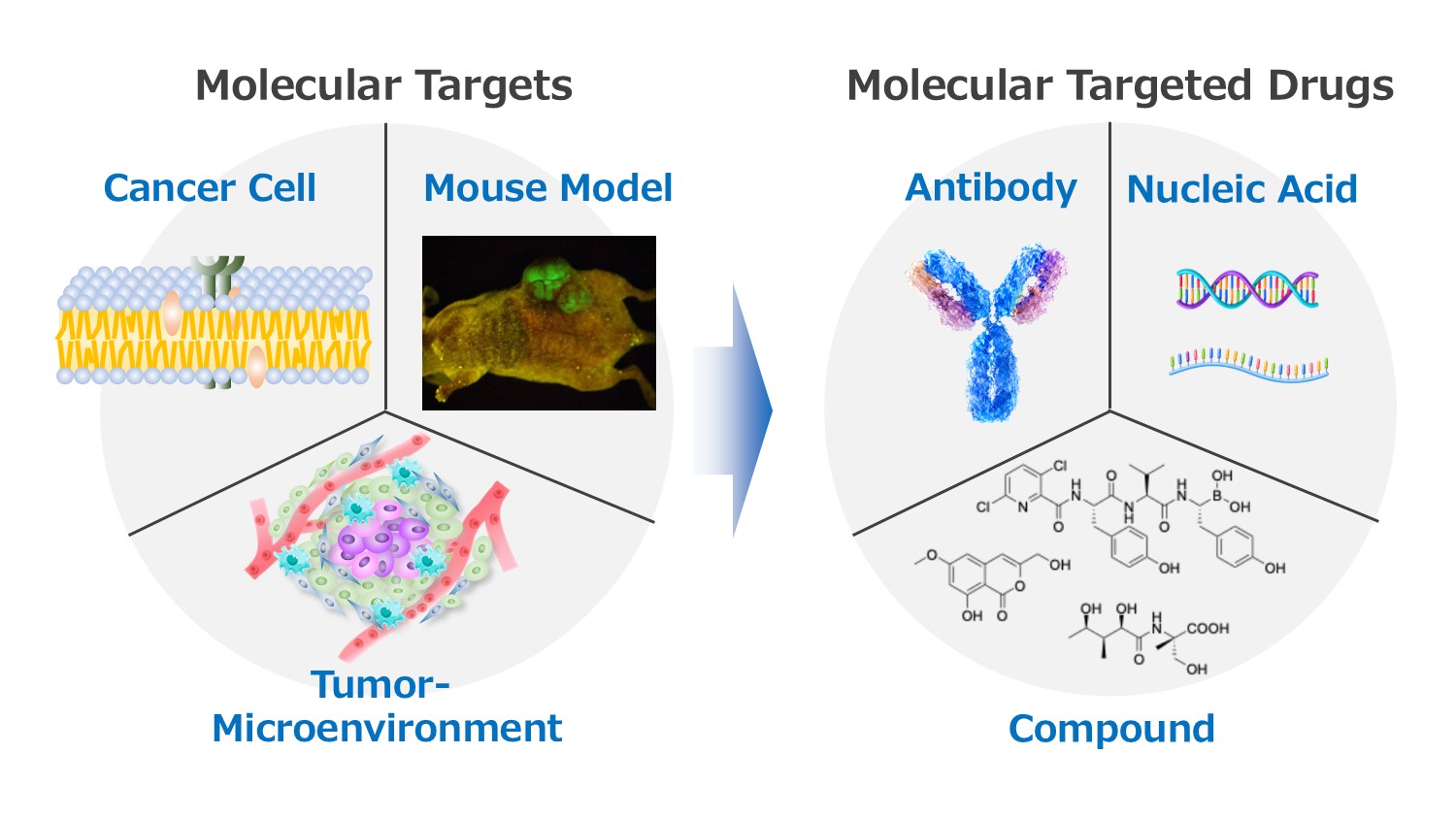
Molecularly targeted anticancer drugs are therapeutic agents that treat cancer by modulating the function of specific molecular targets. These targets include molecules that are specifically expressed or aberrantly activated in cancer cells, molecules characteristic of the tumor microenvironment, and molecules whose expression is upregulated in mouse tumor models.
Our laboratory aims to identify clinically relevant molecular targets for cancer therapy and to develop novel anticancer drugs by utilizing a wide range of therapeutic modalities, including small molecules, peptides, antibodies, and nucleic acid-based therapeutics. In particular, we focus on the discovery and development of molecularly targeted anticancer drugs derived from microbial natural products.
Fig.1 Cancer Target Discovery and Drug Development
2. Identification of Therapeutic Candidates for Small Cell Lung Cancer Using Our Unique Orthotopic Metastasis Model
Small cell lung cancer (SCLC) is a highly aggressive neuroendocrine malignancy accounting for about 10% of all lung cancers. Due to its rapid progression, distant metastases are often present at diagnosis. Although SCLC initially responds well to chemotherapy and immunotherapy, most patients eventually develop recurrent, metastatic disease with acquired resistance. Consequently, its 5-year survival rate remains below 5%, making SCLC one of the deadliest malignancies.
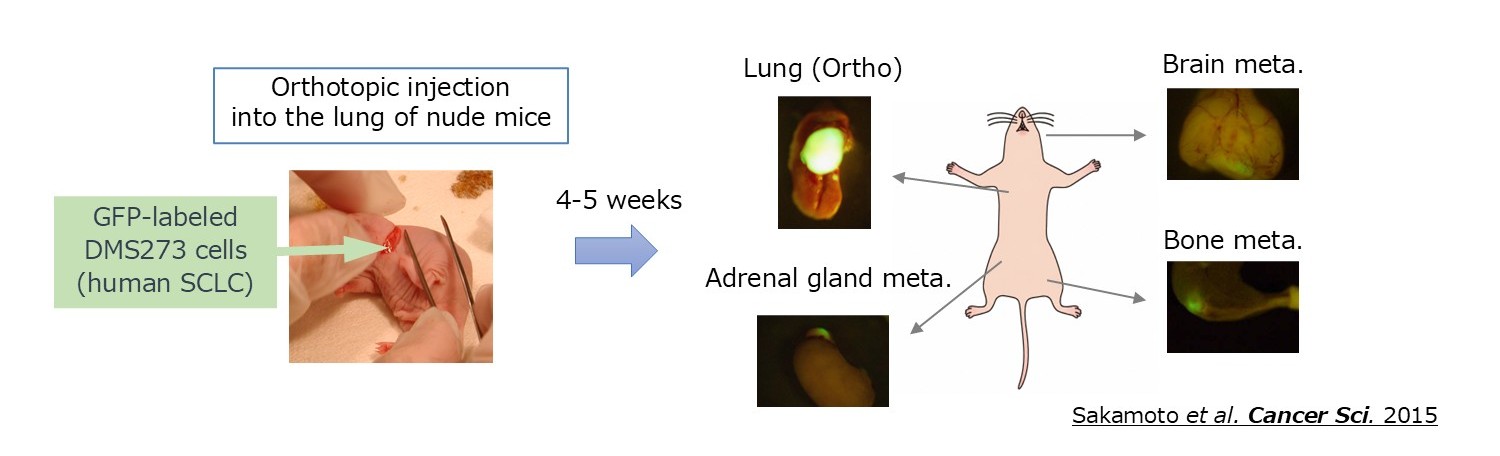
Despite this aggressive behavior, the molecular mechanisms underlying SCLC progression and metastasis remain poorly understood, posing a major obstacle to effective therapy development. To address this, we established a unique orthotopic mouse model by implanting human SCLC cells into nude mice lungs. This model faithfully reproduces patients’ metastatic patterns, with a high incidence of spontaneous distant metastasis. Using this clinically relevant model, we investigate the molecular mechanisms of metastasis, identify novel therapeutic targets, and evaluate promising therapeutic candidates for SCLC.
Fig.2 A Unique Orthotropic Metastasis Model for SCLC
3. Discovery of bioactive compounds from entomopathogenic fungi with a focus on Cordyceps species
We have isolated Cordyceps and related entomopathogenic fungi as screening resources for drug discovery. Entomopathogenic fungi are known to produce various bioactive molecules in its life cycle, infection process of insects, proliferation and death of insects. The molecules produced by these microbes are expected to possess unique structures and biological functions and may represent seed compounds for drugs.
We provide microbial culture samples to internal and external drug screening program and support the discovery of bioactive natural compounds with unique mechanism of action.
Fig. 3 Photographs of Cordyceps
4. Microbial Technologies for Sustainable Environmental Solutions
【Solving Environmental Challenges through Unique Microbial Functions】 Microorganisms play essential roles in life science, environmental protection, energy production, and food industries. Their unique metabolic capabilities provide innovative solutions that cannot be achieved by conventional technologies. Our research focuses on applying microbial biodegradation and functional biomaterials to address environmental and industrial challenges. Through three research areas—eco-friendly treatment of marine waste, sustainable maintenance of industrial facilities, and development of environmentally friendly biomaterials—we aim to translate microbial functions into practical technologies for a sustainable society.
a) Microbial Technologies for Resource Recycling— Eco-friendly Treatment of Marine Waste —
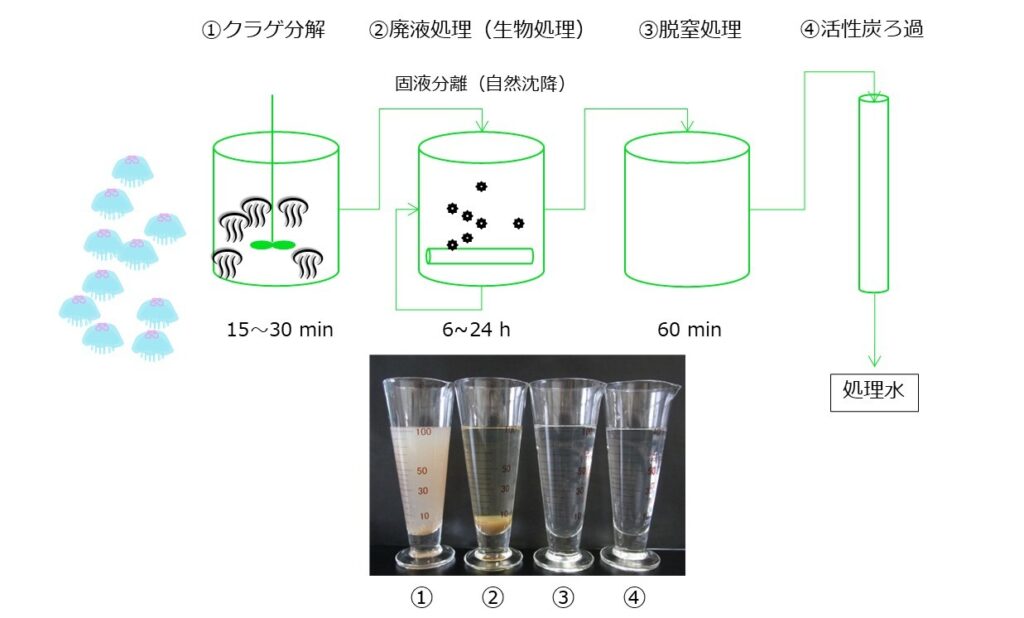
Large quantities of jellyfish and shellfish waste are generated at seawater intake facilities of power plants. We have developed an integrated biological treatment system that converts marine waste into liquid and treats the resulting wastewater. This environmentally friendly technology has already been introduced at major electric power companies and contributes to sustainable resource recycling.
Fig. 4 Process flow of waste jellyfish decomposition and wastewater treatment, and appearance of wastewater at each treatment step
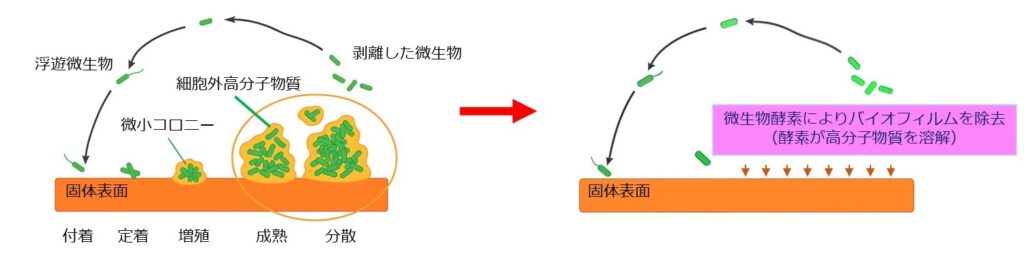
b) Microbial Technologies for Industrial Facility Maintenance — Prevention and Enzymatic Removal of Biofilms —
Biofilms reduce the performance and lifetime of industrial equipment such as reverse osmosis (RO) membranes and heat exchangers. In collaboration with industry partners, we are developing zwitterionic anti-biofilm materials and enzyme-based cleaning technologies that safely remove biofilms without damaging equipment, thereby reducing maintenance costs and chemical consumption.
Fig. 5 Biofilm Adhesion to Solid Surfaces and Enzymatic Removal
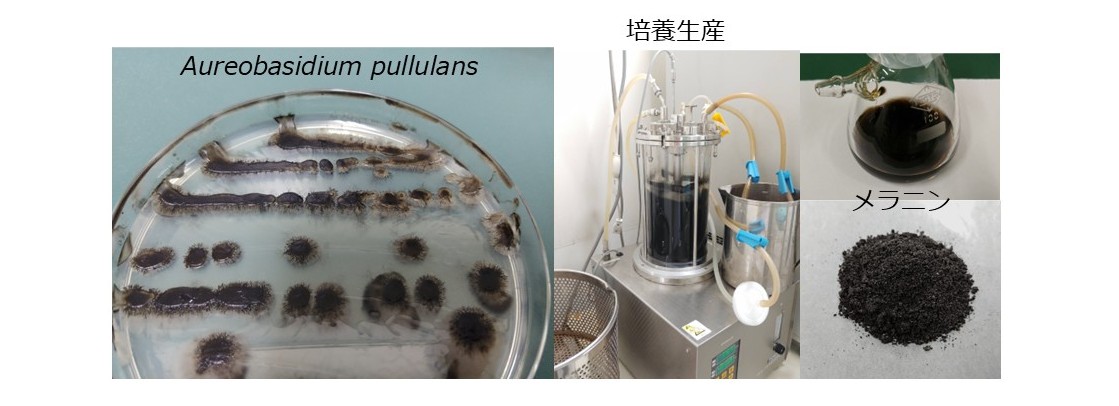
c) Microbial Technologies for Advanced Biomaterials — Functional Materials from Microbial Melanin —
Microbial melanin is a durable natural biopolymer with excellent resistance to harsh environmental conditions and can be produced sustainably by microbial fermentation. We are exploring its applications as an environmentally friendly functional material by utilizing its UV-shielding, antioxidant, and adsorption properties for coatings, adsorbents, and other advanced biomaterials.
Fig. 6 Purification of Melanin Fermented by Black Yeast